


















Download the Felix App
Earn reward, visit our shop and get exclusive offers on the app
Download now
Earn reward, visit our shop and get exclusive offers on the app
Download nowPut your health first in 2026 with free visits on all categories, and $200 off longevity testing.
Download nowPut your health first in 2026 with free visits on all categories, and $200 off longevity testing.
Download now
AI-generated summaries may be inaccurate and do not constitute medical advice. Third-party AI tools are not under Felix's control, and your use of them is at your own risk.
Now that your treatment is on the way, we’ve created a handy guide to support you during your first few months. Don’t forget to store the medication in a fridge as soon as it arrives.
You should take tirzepatide (Mounjaro/Zepbound) once per week, on the same day each week, with or without food. We recommend keeping track of your injections and doses each week by recording them in your calendar.
Start at 2.5 mg and maintain that dose for the first 4 weeks. You will increase your dose in week 5.

View the full 12 week dosing schedule for tirzepatide (Mounjaro/Zepbound).
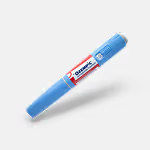
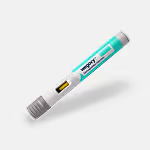
Remove the pen cap from your KwikPen and attach a new pen needle. Then, after priming the pen, inject 2.5 mg once this week.
After each injection, remove the used pen needle and safely dispose of it in the sharps container. Then, replace the pen cap and store it back in the fridge.
Watch this step-by-step video to learn how to use the KwikPen, or read these instructions.
If you have questions about how to use the medication, book a call with a Felix pharmacist.
To remain stable and effective, the medication must remain between 2 to 8°C. You should store the medication in a fridge as soon as you receive it, and it should only be removed from the fridge just before administering your first injection.
Inject into the lower stomach area, about 1-2 inches away from the navel. This is usually easiest and ensures the medication gets absorbed into your bloodstream quickly. Other good injection sites include upper legs (thighs) and upper arms.
You should choose a new injection site each week, leaving 1-2 inches between sites to avoid irritation.
Common side effects include nausea, vomiting, diarrhea, constipation, feeling tired, and acid reflux. These typically resolve within a couple of weeks.
If your side effects last longer or become moderate, frequent, or unmanageable, message your healthcare practitioner. If they become severe (e.g., significant or persistent abdominal pain), seek in-person care with a healthcare practitioner, or visit a walk-in clinic or the emergency department.

Access to our sustainable weight management course is included as part of your treatment.
This 10-module course will help you develop the tools and mindset to make lasting lifestyle choices.
The information provided in this guide is not meant to replace the medical guidance given to you by your healthcare practitioner. If this information conflicts with what your practitioner has told you, always follow their direction first.
Medically reviewed by
References