Many people are still told that their weight comes down to diet and exercise, and that they just need to try harder. That judgment hurts, and can also keep people from getting support that could improve their health.
That’s exactly why we created Cutting the Quiet. In this limited series, host Amber Mac sits down with medical experts and Canadians navigating their own journeys to talk honestly about body size, health, and the science behind weight management.
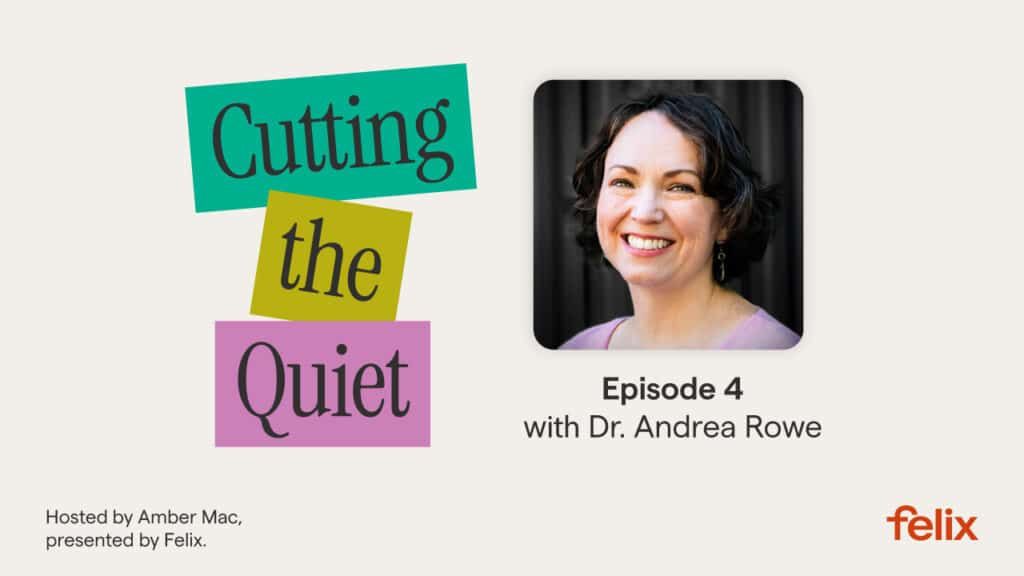
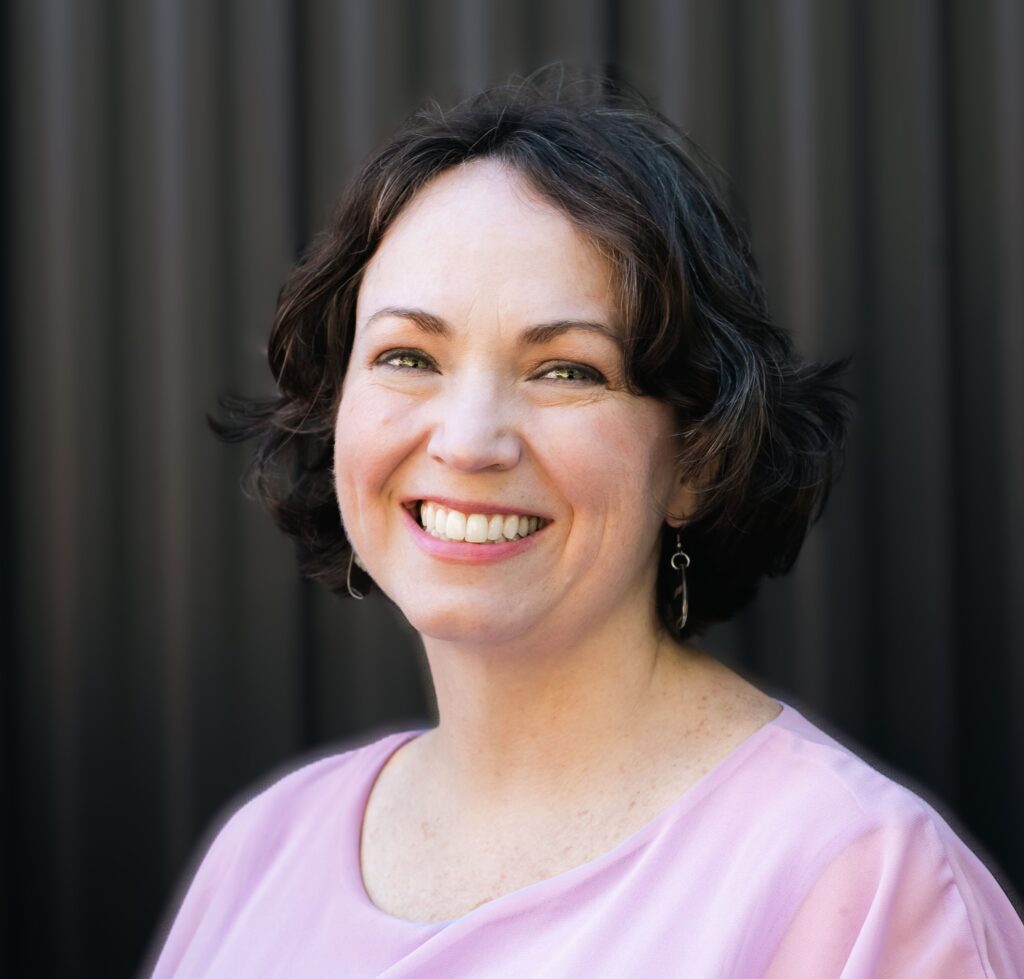
Our fourth guest is Dr. Andrea Rowe,a physician practising in emergency medicine and obesity medicine. She is committed to helping people understand obesity as a medical condition and to reducing the stigma that can keep them from seeking care.
Never miss an episode
Get new episodes by email.
By entering your email and clicking “Submit”, you consent to receive marketing emails from Felix Health Inc. about our care plans, products, and services. You can unsubscribe at any time. For more information, please see our Privacy Policy.
NOTE: This is general information, not medical advice and does not create a doctor-patient relationship. Dr. Rowe is the Assistant Medical Director at Felix, which produces this series, and served on an Eli Lilly advisory board. However, she is not endorsing any company, product, program or medication. Please speak with your own healthcare provider about your health.
How Dr. Rowe came to obesity medicine
Dr. Rowe practises as both an emergency physician and an obesity medicine physician. She chose obesity medicine because of her own experience: “I came to it as a patient first.”
She lived in a larger body and tried everything. Society told her it was all her fault, and she told herself the same thing. Then she started looking into the science and learned how complex weight really is.
Until then, she hadn’t understood that science, even as a physician who had struggled with her own weight. She realized that if she hadn’t known, her patients likely didn’t either. Now that she has that knowledge, she wants to help people in her situation who don’t have the same access to information, treatment, and understanding that she has.
Why obesity is a medical condition
Amber asked what it means to stop treating weight as a social issue and start treating it as a medical condition.
Dr. Rowe explained that, for a long time, medicine didn’t know much about the science, biology, and genetics behind body size. What doctors mostly knew was that a larger body size was linked to other medical complications.
Today, obesity is understood as a chronic medical condition that isn’t about a person’s effort or willpower: “It meets all the criteria for a chronic medical condition.”
It’s also a relapsing condition because the body adapts and changes over time. Many people live with obesity throughout their lives, but it often looks different at different stages.
In practice, treating obesity as a medical condition starts with a conversation. A practitioner talks with the patient about their goals, identifies which treatment options are available and appropriate, and supports them through the process.
Weighing the risks and benefits of treatment
Amber asked how someone should think about risks and benefits when they’re deciding on treatment.
Dr. Rowe says two kinds of risk are equally important to consider: The risks of treatment and the risks of not treating. She is also clear that the decision belongs to the patient, not to her. She says she can’t, and shouldn’t, ever tell someone, “You need to have this treatment.”
What she can do is explain the benefits and risks of treatment, along with the benefits and risks of not treating. Once a patient understands all four, they can have an informed conversation together about their journey, their treatment plan, and their health goals.
What BMI can and can’t tell you
Body mass index, or BMI, is a calculation of weight relative to height. Dr. Rowe points out that it isn’t necessarily an indicator of health.
BMI became standard in research because it’s easy to measure, and easy to measure consistently. But what researchers really want is information that helps improve people’s health. A lot of what we know is tied to BMI, so the science is now looking for additional, and ideally better, ways to measure health.
Goal weight vs. best weight
Goal weight is a number on the scale that someone has picked. It might be your choice, or your doctor’s. Sometimes it comes from remembering how you felt at 25 and wanting to feel that way again. A goal weight can carry emotional meaning, and sometimes medical meaning too.
Best weight is different. Dr. Rowe describes it as a concept rather than a number. It’s the weight you can reach and sustain over the long term while living your healthiest and happiest life. Ideally, it’s tied to the goals you have for your health and your life, like moving more easily or managing a chronic condition.
Bodies also change over time. Your metabolism, biology, and lifestyle at 25 aren’t the same as they are in perimenopause, for example. Dr. Rowe says your activity, nutrition, and medical plan all need to take those changes into account. Your best weight should fit your current lifestyle, your current situation, and the things you value now.
What happens to muscle when you lose weight
Amber asked what happens in the body during treatment, using muscle mass as an example.
Dr. Rowe explained that this isn’t unique to today’s medications. Whenever body size decreases, whether through diet, surgery, or medication, the body loses some fat mass and some muscle mass.
The reason it’s getting more attention now is that current medical and surgical treatments are quite effective. The changes are more noticeable, and researchers can measure more precisely how much of each tissue is lost and when. What isn’t fully understood yet is what that loss means for health, and that’s an active area of research.
In the meantime, Dr. Rowe says it’s important to maintain muscle by getting enough protein and doing resistance training. The aim is muscle that works for you in daily life: “If your body size is smaller and you’ve lost a lot of weight and you like that, but you’re really weak and you’re finding it’s hard to get up the stairs, that’s not necessarily what people will be happy with on their health journey.”
Where virtual care fits
Amber asked how virtual care has changed access to treatment over the course of Dr. Rowe’s career.
Healthcare has changed a lot, Dr. Rowe says, especially since the pandemic: “Virtual care, I think, in my opinion, is here to stay.”
The open question is what role it should play. Virtual care helps many people who have trouble accessing care, but the quality of care still has to be there. Healthcare is still working out which needs can be met virtually and which need to be seen in person. Dr. Rowe believes virtual care should be part of our healthcare system. For now, though, she doesn’t think it should replace the existing system or in-person care.
Dr. Rowe’s message: Your health matters
To close, Amber asked Dr. Rowe whether there was something close to her heart that she’d like to share with listeners.
Dr. Rowe has lived in a larger body herself, and she knows that many people in that situation have experienced significant trauma because of it, often emotional trauma. She believes society needs to change how it talks about weight, and that education is one of the first steps. Conversations like this one are part of that.
She wants people to understand that obesity is a medical condition that deserves treatment, and that many treatment options are available. Seeking medical care for a chronic condition is appropriate and evidence-based, whether that condition is high blood pressure, diabetes, or obesity. Getting that care shouldn’t feel like cheating, and it isn’t a sign that you’ve failed. She doesn’t want anyone to think, “I couldn’t do it on my own, so I’m a failure, and now I have to get medical care.”
Facts with Felix: Can doctors carry weight bias too?
Every episode of Cutting the Quiet closes with Facts with Felix, a segment where Dr. Rowe answers real questions from people on their own weight journey.
This episode’s question: Is it true that doctors themselves can carry weight bias too?
Dr. Rowe says weight bias and stigma are tricky and show up in many areas, which makes it especially important to talk about them in healthcare. Canada’s current adult obesity clinical practice guidelines address weight bias directly.
Healthcare practitioners are human. They grew up in the same society and culture as their patients. For a long time, practitioners also didn’t get much training on obesity, because the science wasn’t understood. In the past, that bias has shown up for patients in several ways: Shorter visits, other conditions being dismissed, not being offered treatment, or having other medical conditions blamed on their body size.
If that has happened to you, Dr. Rowe encourages you to try again and to bring your questions to your healthcare practitioner: “The science and treatments have changed, and hopefully the stigma is also changing.”
NOTE: This is not medical advice, but general information. Dr. Rowe is the Assistant Medical Director at Felix and has been on an advisory board for Eli Lilly, but is not endorsing any product, program, company, or medication. Always speak with your healthcare provider before making any decisions about your health or treatment options.
Keep the conversation going
We hope this episode shifted your thinking or made you feel a little more validated in your own experience. If it did, consider sharing it with someone who you think may also appreciate it.
[00:00:21] Amber Mac So much about body size and health still goes unsaid. The science gets skipped, the shame gets glossed over, the lived experience gets dismissed. This is where that changes. I’m Amber Mac, and this is Cutting the Quiet, a Felix Limited series where I talk with medical experts and Canadians navigating their journeys to bring you truth and insight. Here’s something most people still don’t understand about weight. Up to 70 percent of it is determined by biological factors like genetics and hormones. So why are people still being told to just fix their diet and exercise? That judgment doesn’t just hurt in the moment, it keeps people from getting support that could improve their overall health and wellbeing. Joining me today to bring clinical expertise into these conversations is Dr. Andrea Rowe. A board-certified emergency medicine and obesity medicine physician. She’s made it her mission to make obesity care more accessible and to break down the barriers standing between people and the support they need. Andrea, welcome to the show. Thank you so much for joining me today.
[00:01:35] Dr. Andrea Rowe Thanks, I’m so excited to be here.
[00:01:37] Amber Mac For listeners meeting you for the first time, what should they know about your background and why obesity medicine became your focus?
[00:01:45] Dr. Andrea Rowe Yeah, I’m so excited to be here. And I wanna start by letting everyone know that I am a practicing obesity medicine physician and an emergency physician actually. And I’m gonna be talking about obesity as a chronic medical condition in general, but not about anyone’s particular specific individual health situation or anything. So this is not medical advice. If any of this rings true to people, that’s actually really great because it means that it’s an important thing for you to discuss with your healthcare practitioner. I am also the assistant medical director for Felix, who is producing this series, and I’ve been on advisory board for Eli Lilly, but I want everyone to understand that I am not endorsing any particular company program, medication or treatment or product at all right now. So kind of getting back to why I started pursuing obesity medicine as part of my career is because I came to it as a patient first. I had lived experience, as they say, with increased body size and living in a larger body and trying everything and being told by society and myself that this was all my fault. And I started to look into the science and understand how complex this is, and realize that if me as a physician who has struggled with this, like if I can’t know that and didn’t know that and I didn’t understand that, how would patients know or understand that? I wanted to help others in my situation who didn’t necessarily have access to all the information that I do and the treatment and the understanding that I have. So that’s how I got into this.
[00:03:52] Amber Mac Speaking of language, you’ve mentioned before that we need to stop treating weight as a social issue instead of a medical condition. Can you explain what exactly that means and what that shift actually looks like in practice?
[00:04:09] Dr. Andrea Rowe Traditionally, we didn’t really have a lot of understanding about the science and the biology and the genetics and all of that about our body size. And we mostly knew that increased body size was associated with other medical complications and conditions and whatnot. But now we kind of understand that it is a chronic medical condition. And not about a person’s effort, their willpower. It meets all the criteria for a chronic medical condition. And it also is relapsing. And that’s because our body adapts and changes over time. And so many people experience obesity throughout their life, but often in very different ways at different stages. In practice, treating obesity as a medical condition means many things, actually. It means having conversations with patients about their goals and deciding what treatment options are available and appropriate and supporting patients in that.
[00:05:27] Amber Mac When it does come to treatment, how should someone think about the risk-benefit analysis when they’re making that choice?
[00:05:39] Dr. Andrea Rowe Both are equally as important. The risks of treatment and the risks of not treating. I can’t ever tell someone and shouldn’t, you know, like, you need to do this. You need to have this treatment. But I need to explain to patients the benefits of treatment, the risks of treatment. The benefits of not treating and the risks of not treating so that we can have an appropriate, educated conversation about their journey, their treatment plan, and their health goals. So I would really encourage everyone if these are concerns for them to make an appointment and talk to your health care practitioner.
[00:06:24] Amber Mac What about BMI or body mass index and its limitations? Are there alternative ways to be able to measure health beyond just thinking of size?
[00:06:37] Dr. Andrea Rowe For people who don’t really know the details, BMI is basically a calculation of like height to weight, right? It’s not necessarily an indicator of health. It’s been used traditionally because in studies it’s really easy to measure and it’s fairly easy to get consistent measurements, which is what we want in research, right, but unfortunately what we really want in research is to improve health. And to get information to improve health. And so we have a lot of information related to BMI. And currently where we’re at with regards to science and treatment is trying to find additional and ideally better ways to figure that out.
[00:07:26] Amber Mac What about the difference between best weight versus goal weight? What is the distinction there, and why does that distinction matter?
[00:07:36] Dr. Andrea Rowe So goal weight is basically a number on the scale that either you picked, your doctor picked, someone picked. And sometimes it’s because you remember how you felt when you were 25 at that body size and you wanna feel like that again. So sometimes it has emotional significance, sometimes there’s been some medical significance. The best weight, however, is more of a concept. It’s not actually a number necessarily. In general, it’s the way someone can achieve and sustain long term while living their healthiest and happiest life. So it’s not necessarily a number on a scale or a chart or anything like that, but hopefully it relates more to goals that patients have for their health or for their life. So like, it’s a way where they can be moving easier or their chronic medical conditions are being managed better. But we have to also recognize that over time, our bodies change. So someone’s body at 25 and your metabolism and your biology and all of that and your lifestyle, you know, it is different than, you know someone who, for instance, is in perimenopause. It means that your health and your goals, and you know, your activity and nutrition, your medical plan, all need to take all of that into account in order to get to the best weight for you long term, but that is in line with your current lifestyle, your current situation and your current values and goals.
[00:09:29] Amber Mac One thing that I would love to get you to explain is what happens physiologically when someone is on treatment, when we think about things like muscle mass changes as one example, like what is actually happening to the body?
[00:09:45] Dr. Andrea Rowe That is something that is not unique to the current medication landscape. Anytime that our body size decreases, you know, whether it’s from a traditional diet, whether it is from surgery, or whether it was from a medication, we are going to lose different parts of our body composition. So we will have fat loss, fat mass loss, like adipose tissue. But we will also have some muscle mass loss. And the concern arises in that the medical management and surgical managements that we have now are showing, are quite effective. So it’s becoming more noticeable that, and we’re able to quantify more, how much of these various tissues are actually being lost at what point. What we don’t necessarily fully understand is the significance of that. You know and so that’s kind of an area of in you know research right now and, you know, you can have maybe some muscle loss, but it but the muscle that you do have is more functional, you know, so really focusing on maintaining muscle mass, of course, with adequate protein intake, with resistance training. That is so important. But also making sure that we’re maintaining functional muscle. And because if your body size is smaller and you’ve lost a lot of weight and you like that, but you’re really weak and you’re finding it’s hard to get up the stairs. That’s not necessarily what people will be happy with as on their health journey.
[00:11:45] Amber Mac What about virtual care alongside generic treatment options? How has that changed the barriers to access? And what have you seen throughout your career so far?
[00:11:58] Dr. Andrea Rowe Our world has changed and health care has changed, especially because of the pandemic. Virtual care, I think, in my opinion, is here to stay. The question is where its role is. Because it does help many people with access issues, but it’s really important to make sure that the quality of care is still there. You know, and that’s kind of what things are being worked out in our world and in our society and all that is what is appropriate for virtual care, what is not appropriate for a virtual care? What needs to be seen in person? And how, and how to kind of navigate that. It should be part of our healthcare system, but at this point anyway, it should not be instead of our existing healthcare system. And it should not be instead of in-person care.
[00:13:12] Amber Mac As we wrap up our conversation, is there something close to your heart that you would like to share with our listeners in terms of navigating weight health?
[00:13:23] Dr. Andrea Rowe Having had the experience of living in a larger body, many people in that situation have had significant trauma related to that, frequently emotionally. So we need to, as a society, change the dialogue. And I believe through education is kind of one of the first steps, conversations like this. You know, so that people understand it’s a medical condition that is deserving of treatment, that there are many treatment options available and that seeking medical care for a chronic medical condition, whether it’s high blood pressure or diabetes or obesity is appropriate and evidence-based and is something that should not be felt as cheating. It should not considered failing. I couldn’t do it on my own, so I’m a failure, so I now have to get medical care. Health matters, your life matters. And your medical care deserves to reflect that.
[00:14:47] Amber Mac Well, listen, thank you so much for sitting down with me today.
[00:14:50] Dr. Andrea Rowe It’s been a pleasure.
[00:14:51] Amber Mac Andrea, thanks so much for bringing your expertise and your genuine care for people and your practice to this episode. The more we ask questions and uncover truths, the more equipped people can feel to make the right decisions for their health. Andrea, before this episode ends, we have a Facts with Felix question from someone on their own weight journey that we would love to get your point of view on. The question is this, is it true that doctors themselves can carry weight bias too?
[00:15:22] Dr. Andrea Rowe Weight bias and stigma is really tricky and pervasive in a lot of areas. Weight bias is really important to talk about and specifically in the healthcare setting, so much so that our current adult obesity clinical practice guidelines here in Canada specifically address this and recognize that weight bias is something to be cognizant of and reducing it should be intentional. Healthcare practitioners are human, and they have had many life experiences. They have had, they have grown up in the same society and same culture as patients have. As we start to get more information about the science, we start to understand that this is a chronic medical condition, and we didn’t used to have a lot of training as healthcare practitioners about obesity because we didn’t know that. But we have learned so much and we now have not just understanding and knowledge but also treatment. Sometimes that has showed up in the past as for patients as you know shorter visits or having other conditions dismissed or not offered treatment or where other medical conditions are attributed to their body size. And so if you have ever felt like that in the past, I encourage you to try again, to bring up the questions and the conversations that you need to have with your healthcare practitioner. The science and treatments have changed, and hopefully the stigma is also changed.
[00:17:10] Amber Mac To everyone listening, thank you for tuning in and being part of Cutting the Quiet. I hope this episode shifted your thinking or made you feel more validated in your experience. If so, share it with someone who could also benefit. That’s a wrap on this episode, and we’ll see you next time.
Dr. Andrea Rowe
Dr. Andrea Rowe is board-certified in Emergency Medicine (ABEM) and in Obesity Medicine (ABOM). She believes in helping people work towards health goals that fit their lives, using approaches that are evidence-based and sustainable.
Amber Mac
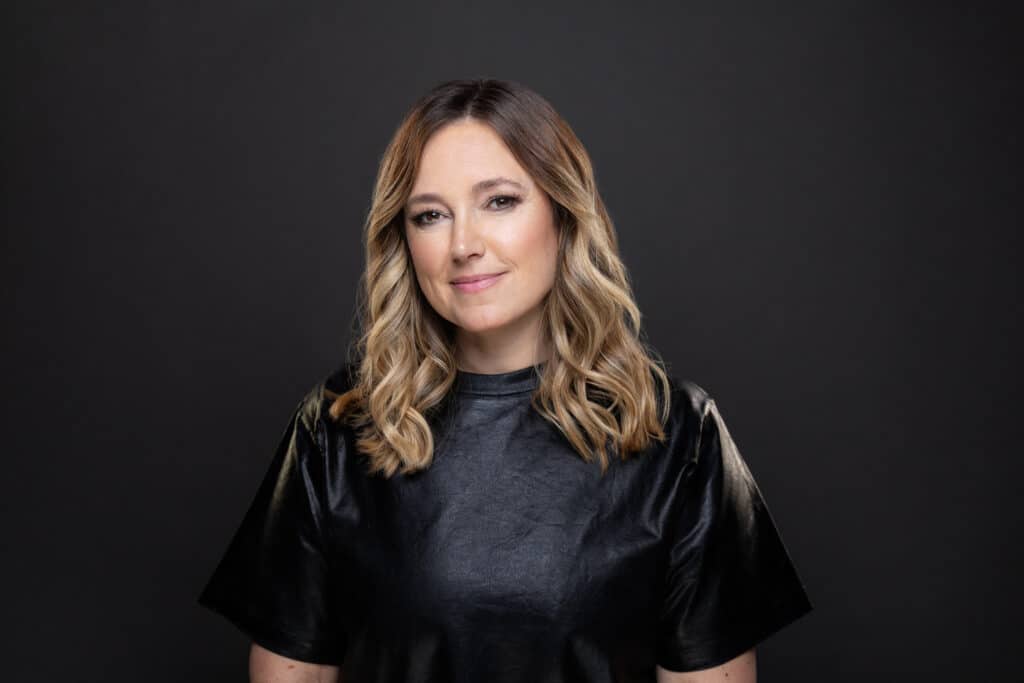
Amber Mac is a Canadian broadcaster, bestselling author and award-winning podcaster who has spent more than two decades helping people make sense of the moments that shape their lives. She hosts The AmberMac Show on SiriusXM and is a regular business and tech expert on CTV, BNN and CNN. She's been named one of DMZ's Women of the Year.