Have you ever found yourself defending a decision before anyone asked you to explain it?
For a lot of Canadians, that’s what talking about weight feels like. Somewhere along the way, personal health choices became public conversations, and the science, the shame, and the lived experience all got lost in the noise.
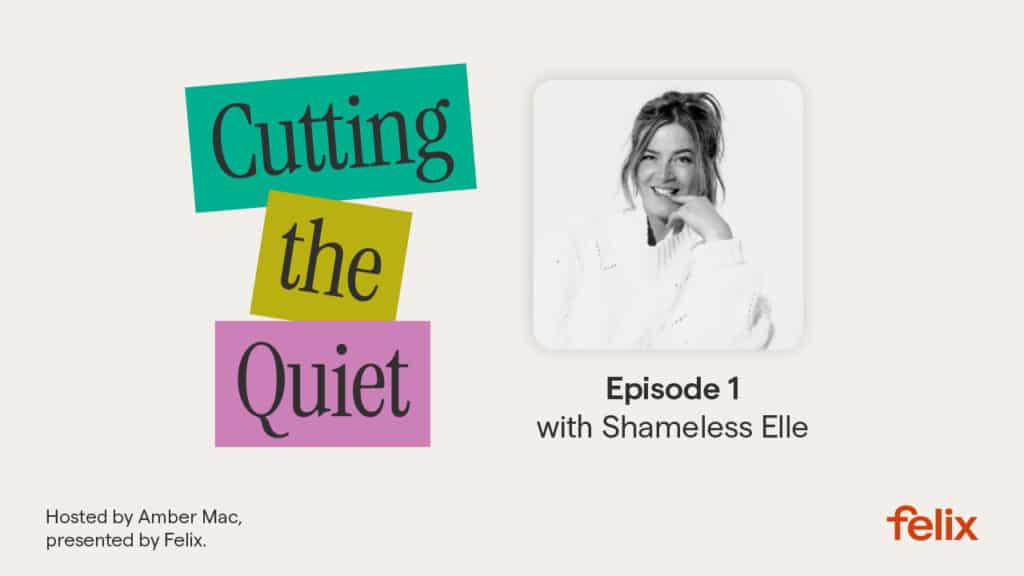
That’s exactly why we created Cutting the Quiet. In this limited series, host Amber Mac sits down with medical experts and Canadians navigating their own journeys to talk honestly about body size, health, and the science behind weight management.
Never miss an episode
Get new episodes by email.
By entering your email and clicking “Submit”, you consent to receive marketing emails from Felix Health Inc. about our care plans, products, and services. You can unsubscribe at any time. For more information, please see our Privacy Policy.
Our first guest is Lindsay James, known to millions online as Shameless Elle. She built her audience by being open about her relationship with weight and her experience with weight management treatment.
Prefer to read instead of watch? We’ve recapped the full conversation below.
Why Shameless Elle went public about her weight
Elle has never been one to keep things to herself. But her reason for sharing this part of her life goes deeper than personality.
‘I think shame grows really well in silence. And when you put that out there, you usually find that the things most people keep in their heads, other people say ‘me too.’
She also says that after a long, hard year with plenty of ups and downs, sharing what she was going through was about all she had the bandwidth to do.
Doing the research before starting treatment: An eight month wait
Elle’s doctor was the first to bring up weight management treatment and sent Elle home with websites and paperwork to read through.
Then the medication sat in her fridge. For eight months.
‘I watched people’s videos on TikTok and Instagram. I talked to friends. And I think there was a big part of me that felt scared.‘
What finally changed her mind? She realized the struggles she was already living with might be just as hard as the ones she was worried about on treatment.
If you’ve been sitting on the same decision, that hesitation is normal. Taking time to research, ask questions, and understand your options is an important part of the process.
Whose opinion should matter most?
Between social media, friends, family, and the internet at large, everyone seems to have a take on weight loss treatment. Elle’s answer to who deserves a vote is refreshingly simple:
‘I think it’s you, and then it’s your doctor. I don’t think other people’s opinions should make your decision. Leave the decisions about your health care to your healthcare practitioner and yourself.‘
As far as we’re concerned, that’s exactly right.
What food noise actually feels like
Food noise comes up a lot in conversations about weight loss treatment. It’s the term people use for constant, intrusive thoughts about food (you can read more in our guide, Food Noise Explained).
Elle admits she never really understood what people meant until she started treatment herself. Her lightbulb moment came within the first few days, when she noticed she wasn’t finishing her meals. For someone who had always cleaned her plate since she was little, that stood out.
‘There was this moment where I was sitting there thinking about my son Milo. He kind of eats like a mouse. And I thought, is this what he feels like? Do they have willpower that I don’t, or do they just not want it? And then I was like, oh, I just don’t want it. Maybe this is how they felt all along. That, to me, is what food noise is.‘
How her days changed
So what does life look like now? Elle describes it as a trade-off. There’s more effort in some areas (she keeps a close eye on how much water she’s drinking, for example). But there’s a lot less effort in simply walking past the fridge without stopping.
Accountability is not the same as punishment
Committing to a treatment plan takes effort, and Elle has found her own way to stay accountable: She weighs herself every Saturday, publicly, online.
Some weeks, that’s really hard. When she doesn’t see progress, or feels like she didn’t try hard enough, stepping on a scale in front of an audience can bring up a lot of shame.
But here’s what surprised her.
Often, when I feel the most shameful about my progress or how hard I tried, I find a lot of people feel the same way. And I think that’s where you start to learn that accountability is not the same as punishment.
The messy middle: Why sharing the hard parts helps
Scroll through social media and you’ll see plenty of before-and-after photos. What you won’t see much of is everything in between.
‘Sharing the before is easy when you have the after. When you’re at the start of it, you don’t know that you’re going to be successful. That’s vulnerable. And that messy middle part is actually probably the most relatable.‘
Elle believes that’s exactly why so many people connect with her content. She’s sharing from right where a lot of them are, and she thinks we all need to share that messy part more.
“We attach virtue to difficulty”
Of course, being open invites opinions, and not all of them are kind. Some people want to make sure you’ve struggled enough. Elle’s response is one of the most memorable moments in the episode:
‘We don’t ask people to squint for eight months before we give them glasses. We have zippers for our jackets, bread slicers and dishwashers, and nobody’s judging you because you didn’t wash every dish by hand. But we seem to want people to struggle enough.‘
The good news? Those voices are far outnumbered by the people cheering you on. Elle says people regularly message her to say she made them feel more human, and more okay in their bodies.
Bodies aren’t one template to compare
Comparison is a very human habit. We do it in our jobs, our friendships, and our relationships, so it’s no surprise it shows up in weight management, too.
Elle doesn’t think that little voice ever fully goes away. Instead, she suggests getting better at questioning it:
‘Does it matter that they were doing better? If I wasn’t comparing myself, would I think that I was actually doing okay? I don’t think we ever get rid of that little voice in our head. We just have to get better at noticing it.‘
Why the shame doesn’t come from nowhere
If you feel judged for considering weight loss treatment, Elle wants you to know those feelings are real, and they have a source.
‘We’ve had a spectacular historical record of making people feel ashamed about ordinary health issues.‘
She points to periods, menopause, hair loss, infertility, sexual health, and mental health as examples of everyday health concerns people have been taught to whisper about. Body size, she argues, has been treated the same way, with a lot of morality attached to something that tells you very little.
‘It doesn’t tell you anything other than the size of their body. It’s not going to tell you whether they’ve exercised enough, whether they tried enough, whether they eat well enough.‘
Her bottom line: If a healthcare option is available to you, talk to a healthcare practitioner. It’s nobody’s business but yours. And as a society, we need to take a harder look at how shame keeps people who need help from reaching for it.
At Felix, we couldn’t agree more. Breaking down these old stigmas is a big part of why this series exists. (If you’re looking for more on that, read Weight Loss Treatments Aren’t Just for People Over 40: Breaking Down Old Stigmas.)
Elle’s advice if you’re just getting started
To close out the conversation, Amber asked Elle what she’d tell someone who’s right where she was before she started. Maybe the medication is sitting in your fridge. Maybe you’ve been putting off talking to your doctor because you feel ashamed, unsure, or scared.
‘You don’t get answers if you don’t ask questions. You don’t have to make a decision to decide to have a conversation.‘
If you’re curious, get more information. Talk to a healthcare practitioner. Look up the side effects and the benefits, and make the decision that’s right for you.
‘A bad week is just information about what you’re doing. It’s not a failure, it’s not something about you. And sometimes it’s much slower than you expect.‘
Facts with Felix: Is obesity really just about willpower?
Every episode of Cutting the Quiet closes with Facts with Felix, a segment where we get real answers to questions from people on their own weight journey. Dr. Rowe is a board-certified physician in both Obesity and Emergency Medicine.
NOTE: This is not medical advice, but general information. Dr. Rowe is the Assistant Medical Director at Felix and has been on an advisory board for Eli Lilly, but is not endorsing any product, program, company or medication. Always speak with your healthcare provider before making any decisions about your health or treatment options.
This episode’s question: Why do people still treat obesity like it’s just about willpower, when doctors are calling it a chronic condition?
Dr. Rowe explains that for generations we didn’t have the science to understand how our bodies regulate weight, so willpower was the only explanation available. We now know the brain, in part, regulates hunger and fullness through hormones, and that genetics, environment, and behaviour all shape body size and health risk, which means willpower can’t override that biology for a lot of people.
“We would never tell someone with high blood pressure that they just need to try harder”, she says, so it’s time to change the dialogue and talk about weight the way that science does: as something that’s also shaped by biology, and not just willpower.
Keep the conversation going
We hope this episode shifted your thinking, or made you feel a little more validated in your own experience. If it did, consider sharing it with someone who you think may also appreciate it.
[00:01:19] Shameless Elle Thank you, yeah, I’m happy to be here.
[00:01:22] Amber Mac You have built a following by being brutally honest about everything, including things that many people have kept private. Why did you decide to be so public about your weight and your journey?
[00:01:37] Shameless Elle I’ve never been somebody that hides the things that most people keep in their head. I think that’s been something that people have said about me for a long time, was that I say the things people think. But I think shame grows really well in silence. And when you share that, when you put that out there, you usually find that those are the things that most people say, ‘Me too.’ too, like, it’s it’s just not, I didn’t have the bandwidth to do much else. You know, there was, it’s been a long, hard year and one filled with a lot of ups and downs and depression. And so just being able to share what I was going through was about all I could do.
[00:02:24] Amber Mac Who influenced your decision to start treatment?
[00:02:27] Shameless Elle I wouldn’t say that anybody really influenced my decision. I had it brought up with me with my doctor. I had started seeing her for weight management and she asked me if it was something that I was interested in. And then she sent me a bunch of websites and paperwork to look over what it was about. And then I spent eight months with it in my fridge, and I watched people’s videos on TikTok and Instagram. I talked to friends and I think there was a big part of me that felt scared. At the end of not doing it, I just kind of got to a point where I was like, you know what, I think that the struggles that I’m having might be equally as bad as the struggles I’m worried about having with weight management treatment. So that was kind of what initially got me to make the decision.
[00:03:21] Amber Mac Eight months in the fridge, that is a long time to sit with a decision with your doctor, TikTok, and friends all weighing in. Whose opinion should matter the most?
[00:03:32] Shameless Elle When we’re talking about whose opinion should matter most with health care, it’s probably a health care practitioner. Before that, I think it’s you and then it’s your doctor. I don’t think other people’s opinions should make your decision. They leave the decisions about your health care to your health care practitioner and yourself.
[00:03:56] Amber Mac One of the things that we’re going to be talking about with certain guests on this series is this idea of food noise. Has that phrase ever resonated with you? Does that have meaning for you?
[00:04:09] Shameless Elle Yeah, I mean, I don’t think I could understand exactly what people meant when they were talking about food noise before I started getting help with weight management. It was in the first few days that I think I was, you know, I wasn’t finishing my meals and I’ve always been somebody that from a very young age, it was like I never left food on my plate, like I always finished my plate. And I wasn’t, I wasn’t finishing my plate and I wasn’t thinking about food and there was this moment where I was sitting there thinking about my son Milo and he’s just, you know, he kind of eats like a mouse and I thought like, is this what he feels like? He’s not always compelled to finish what’s in front of him or he’s not, you know, the person that’s standing by the food at the party. And I just remember thinking like, do they have willpower that I don’t or do they just not want it. And I never could understand what that was. And then. I think it was within the first few days of starting the weight management treatment that I was like, oh, like, I just don’t want it. And maybe this is how they felt all along. That was, that to me is what food noise is.
[00:05:25] Amber Mac How do your days compare after starting weight management treatment versus before? What is it like now?
[00:05:34] Shameless Elle I try to keep a pretty strict watch on how much water and that kind of thing I’m drinking. So there’s definitely a lot more effort, but also there’s a lot less effort in staying out of the fridge. It’s not something that constantly I’m walking and looking for snacks. So I’d say there’s more effort in other ways and less effort just being able to walk past the fridge.
[00:06:05] Amber Mac Committing to a weight management treatment plan requires that you are committed to something and that also means that you have to be accountable along the way. How have you put that accountability into action?
[00:06:20] Shameless Elle I think I’ve put it into action in a few different ways. I started weighing myself every Saturday online. For me that kind of set up this consistent process of just putting myself out there and checking in with myself. And there has been weeks that that’s been really, really difficult when I don’t see progress, when I feel like I didn’t work hard enough and having to go and weigh myself publicly is hard sometimes. There’s a lot of shame that comes with that. And the wonderful thing is that often when I feel the most shameful about my progress or how hard I tried, usually I find a lot of people feel the same way. So that’s been good. And I think that’s where you start to learn that accountability is not the same as punishment and recognizing that those days or weeks that we struggle or things are harder. That those are not failures. They’re just weeks that we didn’t do as well as the last, you know?
[00:07:26] Amber Mac A bad week isn’t a failure. I think a lot of people really need to hear that. So why do we mostly see the after online?
[00:07:34] Shameless Elle I mean, don’t we love to share good news? Good news is really easy. Sharing the before is easy when you have the after, right? And when you’re kind of in the middle of it, when you are at the start of it, you don’t know that you’re gonna be successful. And so that is difficult, it’s vulnerable. And you are sharing that messy middle part that is actually probably the most relatable. And so I think that is why so many people have related to me going through this journey because the things that I’m sharing are typically right where a lot of people are at. And I think we need to share that messy part more.
[00:08:11] Amber Mac The messy middle is where most of us are. When you share the hard weeks, what do people actually say back to you?
[00:08:19] Shameless Elle I mean, you’re always gonna have people that are not supportive, people that judge you harshly. They want to make sure that you struggled enough, you know, which I find really funny because we don’t ask people to squint for eight months before we give them glasses, and we don’t, you know, and judge people by how they climbed a mountain, whether they took the path or whether they went straight up the side of the cliff. There’s nobody standing at the top asking you how you got there. We attach virtue to difficulty, right? And if you didn’t try hard enough, if you don’t struggle hard enough then you’re not as virtuous, right. People want to tell you that you cheated. Even though in life we choose to take a easier path in a lot of different ways. We have that zippers for our jackets, and we have bread slicers and dishwashers and nobody’s sitting there judging you because you didn’t wash every dish by hand. But we seem to want people to struggle enough. And so there is those judgments. I’m not going to pretend that there’s not, but they’re very few compared to the amount of people that are right there with you, cheering you on that they wanna see you do it. They want to see you thrive and it gives them inspiration. It gives them permission to not be perfect. I’ve had a variety of people message me and tell me that I made them feel more human, more okay in their body. So wonderful, like beyond wonderful.
[00:09:56] Amber Mac A lot of what happens online and across social media is that people often compare themselves to other people. So if someone is going through their own weight management treatment journey, and they are tempted to compare their journey to someone else’s journey on a similar treatment, what would you say to that person in terms of maybe some of the risks of doing that?
[00:10:24] Shameless Elle I think everybody knows the risks. We do it all the time in everyday life, in every job, in every friendship and every relationship. We look at our friends that have a happier relationship than ours, and we ask us why we’re not doing as well. We look people that are doing better academically and wonder why it’s so hard for us. This is a very natural human response. I don’t think you’re ever gonna get rid of that. I think you just have to get better at asking questions. Like, does it matter? Does it matter that they were doing better? If they weren’t there, if I wasn’t comparing myself, would I think that I was actually doing okay? I don’t think we ever get rid of that little voice in our head. We just have to get better at noticing it.
[00:11:06] Amber Mac Beyond people just comparing themselves to other people who are on this journey another thing that happens is that people feel a lot of shame or maybe they feel judged in terms of their decisions about their own bodies. What would you say to someone who is going through some of those feelings?
[00:11:27] Shameless Elle That doesn’t come out of nowhere, right? Frankly, we’ve had a spectacular historical record of making people feel ashamed about ordinary health issues. We’ve had people hide periods and hide the tampon on the walk to the bathroom and whisper about menopause and be embarrassed about hair loss, be ashamed of infertility and sexual health and mental health and depression. And it’s everywhere. So those feelings don’t come from nowhere. They come because we’ve decided that it’s okay to shame people about ordinary health concerns. We think that it is somehow medically useful, which we have very much proven that it’s not. And I’m not sure why we attach so much morality to body size. It doesn’t tell you anything other than the size of their body. And it’s not gonna tell you whether they’ve exercised enough, whether they tried enough, whether they’ve eaten well enough. You could see somebody that is, you know, at the beginning journey and at the end of their journey and they might look exactly the same. I think if there is health care option available to you then you should talk to a health care practitioner and I don’t think it’s anybody’s business but yours. However, I very much understand where the shame comes from because it doesn’t come from nowhere. It’s not in their head. It is something that is in society and I think we have to start taking a much harsher look at ourselves and what we do to people that really need help and aren’t reaching for help because they feel ashamed.
[00:12:57] Amber Mac It’s nobody’s business but yours. That is such a true statement. For someone at the very start of this journey, what do you want them to know?
[00:13:06] Shameless Elle I mean, if we’re talking about people that have the medication sitting in their fridge or have, you know, held off on talking to their doctor because they’re feeling ashamed or because they are unsure or because they’re scared. You don’t get answers if you don’t ask questions. I think you don’t have to make a decision to decide to have a conversation. If you’re curious, if you’re unsure, then the best thing that you can do is get more information, talk to a healthcare practitioner, talk to people, watch videos on other people’s experiences, and just research as much as you can, look up side effects, look up the positive things, and make that decision for yourself. If you have started your journey and you’re doing weight management treatment, then I think the best thing that you can do is just keep tabs on your water, keep tabs on your food, and just keep taking day by day. A bad week is just information about what you’re doing and it’s not a failure, it’s not something about you, and sometimes it’s much slower than you expect.
[00:14:13] Amber Mac Well, listen, I set off the top of our conversation that you’ve built a following by being brutally honest. And I’m so grateful that you could share more of that with me today. So thank you so much for joining me today, Elle.
[00:14:25] Shameless Elle Thank you, thank you so much. I’m very happy to be here to chat with you guys and I’m very honored to be a part of it.
[00:14:34] Amber Mac Before this episode ends, we have our Fats with Felix segment with Dr. Andrea Rowe. Andrea is a board certified emergency medicine and obesity medicine physician. She’s on the line with us now to answer a question from someone on their own weight journey that we would love to get her take on. Hi, Andrea. Today’s question is this, why do people still treat obesity like it’s just about willpower when doctors are calling it a chronic condition?
[00:15:00] Dr. Andrea Rowe Thanks so much for having me on this segment. Before I get to the question, I just want to remind everyone that I’m speaking here generally not as anyone’s individual about anyone’s individual situation, and I’m not giving any medical advice, but if this question does hit close to home, that’s great. It means it’s a really good one for you to bring up with your own healthcare practitioner. Even though I am the Assistant Medical Director at Felix, who produces this series, and have been on advisory board for Eli Lilly, I am not endorsing any product, program, company, or medication. So let’s get to the question now, though. You were asking about why people still treat obesity as if it’s about willpower and how the medical community is starting to talk about it more as a chronic condition. That’s because for generations and generations, we didn’t know better. We didn’t have the science or the medical information that time to really understand about the medical condition of obesity and our body size and health risks associated at various body sizes for different people and ethnicities and genders and all of that. But now we do. We do have more of an understanding. We do more science. And it shows that the brain regulates hormones and hunger and fullness and genetics influence everything and our environment influences things and our social situation and our behaviors and so many other things are involved in our body size and our cardio metabolic risk and our health. When you consider all of that, willpower can’t really override that biology for many people. And so we would never tell someone who has high blood pressure, you know, that they just need to try harder, you know. It’s, you don’t have enough willpower, but we have been saying that with obesity and we need to change that dialog. Now that we have better information and treat it as the chronic condition that our science is currently telling us it is.
[00:17:13] Amber Mac To everyone listening, thank you for tuning in and being part of Cutting the Quiet. I hope this episode shifted your thinking or made you feel more validated in your experience. And if so, share it with someone who could benefit. That’s a wrap on this episode, and we’ll see you next time.
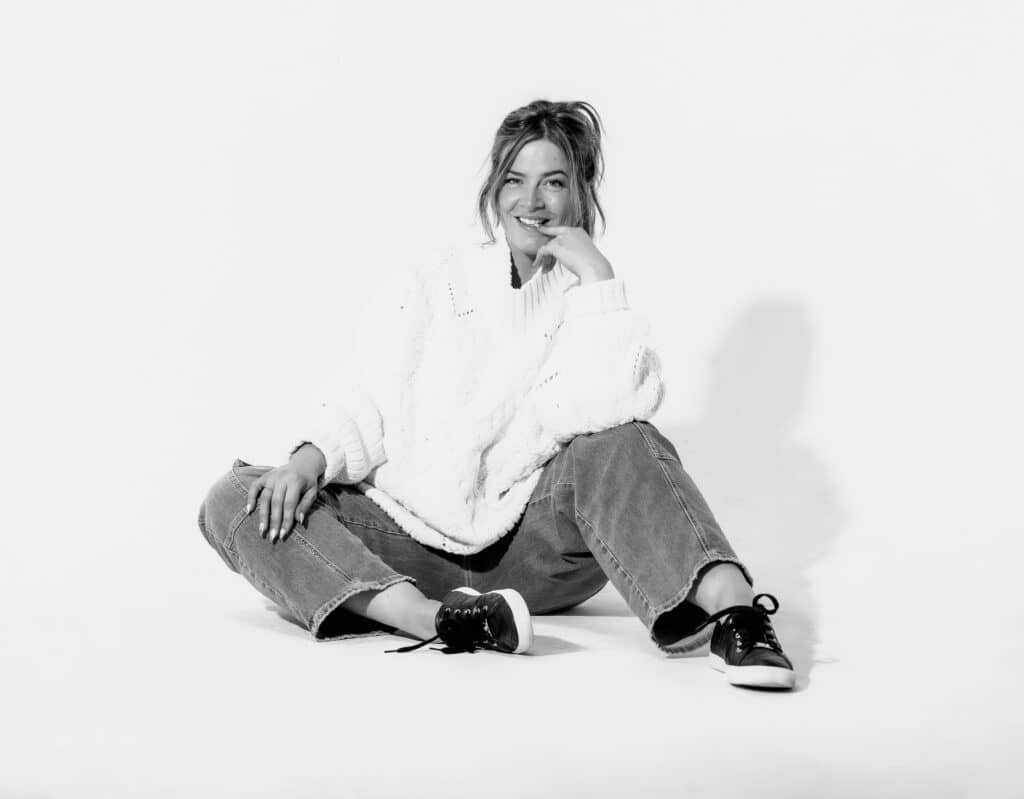
Shameless Elle
Lindsay James, known online as Shameless Elle, is a Canadian content creator and public speaker. She started making videos during the pandemic, and her unfiltered honesty grew into a community of millions. She talks openly about confidence, her own weight journey and the things most people are afraid to say out loud.
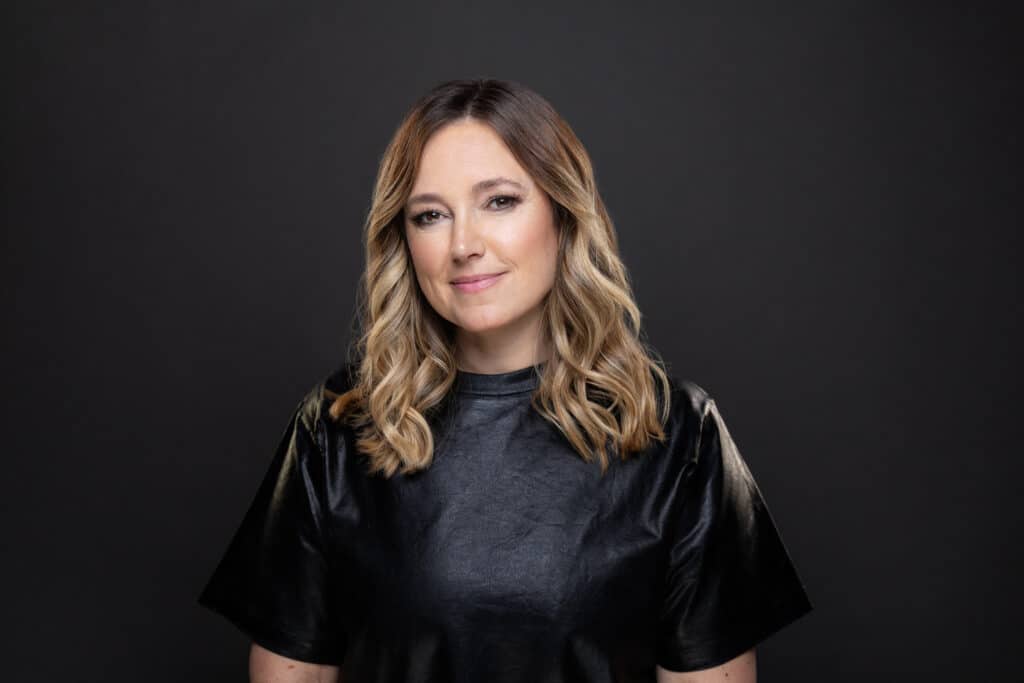
Amber Mac
Amber Mac is a Canadian broadcaster, bestselling author and award-winning podcaster who has spent more than two decades helping people make sense of the moments that shape their lives. She hosts The AmberMac Show on SiriusXM and is a regular business and tech expert on CTV, BNN and CNN. She's been named one of DMZ's Women of the Year.