A lot of people say the hardest part of a weight journey is getting started. Far less is said about what comes after, like how other people treat you or how you feel in your own body.
That’s exactly why we created Cutting the Quiet. In this limited series, host Amber Mac sits down with medical experts and Canadians navigating their own journeys to talk honestly about body size, health, and the science behind weight management.
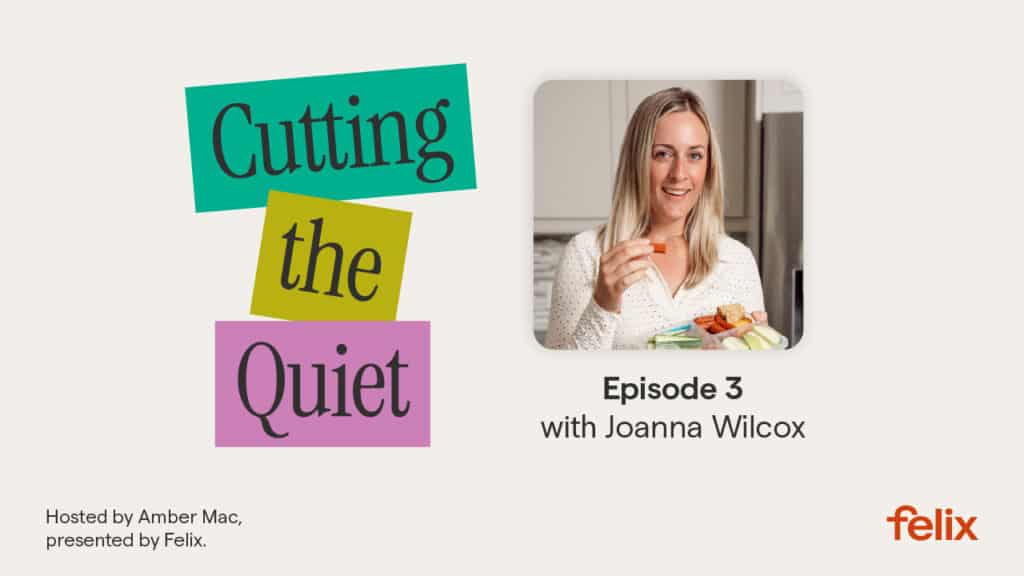
Our third guest is Joanna Wilcox, a Canadian content creator who has shared her own weight journey online for years, including the parts that didn’t go to plan.
Never miss an episode
Get new episodes by email.
By entering your email and clicking “Submit”, you consent to receive marketing emails from Felix Health Inc. about our care plans, products, and services. You can unsubscribe at any time. For more information, please see our Privacy Policy.
How Joanna’s journey started
Joanna has been creating content online since she was 15, starting with a blog before Facebook or Instagram existed. She has struggled with her weight for even longer, since she was 12. Over the years, she lost as much as 50 pounds through exercise, walking, and healthy eating. Then she had her children. When her son was two, she was at the highest weight she had ever been.
Her friends were tired of hearing about her workouts and what she was eating, so she searched for people around her who were going through the same thing. She filmed a video in her bathroom, in a workout top and shorts, and posted it to a new Instagram account. She didn’t think anyone she knew in real life would ever see it.
From that first video, Joanna followed a ketogenic diet for more than 1,000 days and lost 60 pounds, sharing the whole journey with her followers.
Why the journey stopped and started again
Then came the pandemic, along with stress in her own life and in her family. Joanna is an emotional eater, and she turned to food for comfort. She ended up at a higher weight than ever before: “A new high weight. Lucky me, right?”
Amber asked what was going on during the times Joanna paused her journey and then restarted. Joanna said that life as a wife and a mother is complex, and her capacity changes with it. Some seasons leave room for 10,000 steps a day and a full week of meal planning. Others don’t. When her kids are having a hard time, or work is stressful, her energy goes there instead.
“We can’t be 100% for everything all the time. And so for me personally, it was just something’s got to give. And oftentimes as a woman, it ends up becoming your own personal self-care.”
Deciding to start weight management treatment
Joanna had lost weight on her own many times before, through diet, exercise, and tracking her macros. She was used to logging every piece of food she ate, and each time, the weight had eventually come off.
This time was different: “I found myself in a place where I didn’t necessarily have the capacity to do it on my own anymore.” After thinking about treatment for a few years, she decided to start, and she shared that decision with her family and online community.
Joanna’s immediate family was supportive. Her husband had tried treatment earlier, and his experience wasn’t as positive, so while he supported her, he was a little worried she would have similar symptoms. Beyond that, most people kept their opinions to themselves.
She knows that isn’t everyone’s experience. Many of her followers have been judged for wanting treatment, sometimes by their own doctors, who told them to try diet or exercise first, or that they didn’t need “the easy way out.” Joanna says hearing this from her audience has been one of the saddest parts of her work: “This is coming from a health practitioner, someone who you’re going to for help.” Once someone decides to start treatment, she says, they need people around them who will support them through it.
Sharing the decision online
Joanna was terrified to tell her followers. Most of what she had seen in the media painted treatment in a negative light, and she expected the same from her community. Instead, the response was overwhelmingly supportive.
She thinks many of her followers had been considering treatment themselves and wanted to see how it went for her: “So it was really great to feel like everyone wasn’t just going to leave me.”
Today, she gets messages every day from people who want her to hold their hand through it. Many have just met with their doctor and feel ready to start. “I know all the fears that come along with taking this journey, but I think it’s absolutely worth it.”
What her kids see
Amber and Joanna are both moms, and Amber asked how that responsibility has shaped Joanna’s habits. Joanna’s answer: “Kids see everything.” They notice whether she goes for walks, whether she eats well, and whether she talks about her body positively or negatively.
When Joanna started exercising, her kids wanted to come along, and her daughter joined her at the gym for strength training. They have also seen her at a high weight and a low weight, and they don’t hear her talk badly about herself: “Maybe internally I can beat myself up a little bit, but my children aren’t going to hear me talking poorly about myself.”
Stigma from every direction
Amber pointed out that people have become more open about mental health, but there is still a lot of stigma around weight. As a content creator, Joanna sees it from all sides.
When she was following a ketogenic diet in 2016, people showed up in her DMs and comments to tell her she was unhealthy, or that she wasn’t showing her kids balance. When she started treatment, the comments changed but didn’t stop. Now she was taking the easy way out, and she didn’t know what she was putting into her body.
Joanna has lived in a larger body and in a smaller one, and people treat her very differently depending on her size: “I’m almost invisible when I’m larger, to be honest.” It’s not a nice feeling, she says, to know that society places a value on your worth based on your size.
Why there’s nothing to be ashamed of
Amber asked what Joanna would say to someone who is considering treatment but feels ashamed. Joanna’s answer was direct: “There is absolutely nothing to be ashamed about.”
She compared it to mental health. People might tell someone who is having a hard time to just go for a walk in the woods. But it isn’t that easy, and there’s nothing shameful about wanting support.
Once she started treatment, Joanna quickly realized that her weight wasn’t her fault: “It wasn’t a willpower issue. It was a biological issue.” There was a reason she found it harder than other people to eat less, and harder to tell when she was full.
She understands why treatment can feel scary, especially with the horror stories people see online. But she thinks people should feel empowered rather than ashamed, “because we’re living in a time where something like this is available.”
How to tell the people in your life
Amber asked how someone starting treatment can tell the people around them. Joanna’s first recommendation is to speak with your doctor. After that, she says, treat it like any other medical issue: Whether you share it with anyone is completely up to you.
She did point out one situation where it gets tricky. At Thanksgiving dinner at your mother-in-law’s, you may not have the capacity to eat much of what’s served, and some people will push you to eat anyway. (If you’re thinking through how to start that conversation, our guide on how to tell your family, partner, or loved ones can help.)
How Joanna feels now
Before treatment, Joanna felt lost and overwhelmed. She describes it as a snowball being pushed down a hill. She kept trying to start over, but her weight went up week after week.
Starting treatment was a breath of fresh air. Accepting support from her doctor gave her a mental break after managing her weight for so long. She could focus on everything else going on in her life, because her weight no longer took the same time and energy.
Joanna’s advice: You don’t have to do it the hard way
To close, Amber asked what Joanna would tell someone who is where she was before she started treatment. Joanna understands that it’s very scary, and that treatment isn’t free. But she believes it’s worth the cost when you think about where you could be a year from now. Everyone around you may have an opinion, but no one else is living your day-to-day life. Her advice is to shut out the outside noise, because it’s your decision for your life.
Amber also asked what Joanna wishes someone had told her. Her answer: “You’re not a failure because you couldn’t do it on your own.”
“No one gives you an award for doing something the hard way,” she said. “You don’t have to carry that weight on your own shoulders, because there is support and help for you out there.”
Facts with Felix: Does stigma go away once someone starts treatment?
Every episode of Cutting the Quiet closes with Facts with Felix, a segment where we get real answers to questions from people on their own weight journey. Dr. Rowe is a board-certified physician in both Obesity and Emergency Medicine.
This episode’s question: Does stigma ever go away once someone starts treatment, or does it just show up differently?
Dr. Rowe says stigma is tricky, and how it changes over someone’s health journey varies a lot from person to person. When people first start treatment, many hear that they’re taking the easy way out or cheating. Others feel they have to hide that they’re getting treatment, and unwanted comments about their body can become frequent as it changes.
Some people also carry internalized stigma, the voice that says they should be able to do this on their own and shouldn’t need care. Dr. Rowe points out that we rarely say that about other chronic conditions, like high blood pressure or diabetes. Seeking treatment for those conditions isn’t considered cheating: “It’s just care. It’s health care.”
NOTE: This is not medical advice, but general information. Dr. Rowe is the Assistant Medical Director at Felix and has been on an advisory board for Eli Lilly, but is not endorsing any product, program, company, or medication. Always speak with your healthcare provider before making any decisions about your health or treatment options.
Keep the conversation going
We hope this episode shifted your thinking or made you feel a little more validated in your own experience. If it did, consider sharing it with someone who you think may also appreciate it.
[00:00:20] Amber Mac So much about body size and health still goes unsaid. The science gets skipped, the shame gets glossed over, the lived experience gets dismissed. This is where that changes. I’m Amber Mac, and this is Cutting the Quiet, a Felix Limited series where I talk with medical experts and Canadians navigating their journeys to bring you truth and insight. A lot of people say the hardest part of a weight journey is getting started, but what about everything that comes after, like changes in how other people treat you or how you feel in your own body? Today’s guest has been on her own journey for years and understands how full of twists and turns it can be. Joanna Wilcox is a Canadian content creator known for candid, relatable conversations about health, wellness, and real life. Through her platforms, she’s created a community where people can talk openly about their health journeys without shame or judgment. She’s spent years shifting conversations away from appearance and weight alone and toward a broader understanding of metabolic health, wellbeing, and long-term quality of life. Welcome to the show, Joanna. For anyone meeting you for the first time, walk us through your journey. How did you decide to start sharing content online?
[00:01:41] Joanna Wilcox I’ve actually enjoyed sharing content online for many, many years since I was 15 years old. I started creating content, learned how to design HTML websites, created a blog before places like Facebook or Instagram even existed. When it came to my weight loss journey, I was in a place in my life where I had struggled ever since I was 12 years old with my weight. There had been times where I had lost 50 pounds through exercise, walking, eating healthy. And then I had my children. And when my son was two years old, I found myself in a place where I was at the highest weight that I had ever been. I decided that I needed a little bit of a community around me for not only support, but accountability. So I decided to start an Instagram to share my weight loss journey. And I filmed a video in my bathroom in a workout, like bra top and a pair of shorts that I honestly didn’t think anybody I knew in real life was ever going to see because this was at a time when social media just wasn’t as popular. Essentially my friends in real-life were tired of hearing me talk about weight loss. They didn’t want to know how much I was working out, what I was eating, how much water I drank that week, and I needed people who were sort of on the same journey and interested in talking about those things or at least supporting each other as we navigated similar struggles. So I made that video, I shared it to Instagram, and I continued to do, follow a ketogenic diet for over a thousand days. From that day one of posting the video, I never wavered from it until I did. And so part of sharing my journey online, unfortunately, after the pandemic and some, you know, stresses within my own life and within my family, I relied on emotional eating. And so after successfully losing 60 pounds following a ketogenic diet and sharing that journey online, I found myself back to a place where I was now at a higher weight than I’d ever been in my entire life. A new high weight, lucky me, right? And here was a sticking point for me because I had lost weight on my own successfully many, many times, but I found myself in a place where I didn’t necessarily have the capacity to do it on my own anymore. So after a few years of thinking about starting weight loss treatment, I decided to share with my audience online that I had decided to do, you know, what all the celebrities were doing. You see it online, other people are losing a lot of weight, and here I was saying to community I’m also going to start taking a weight loss treatment.
[00:04:26] Amber Mac So before you started that weight management treatment, what were some of the things that you considered?
[00:04:32] Joanna Wilcox Diet and exercise obviously would be the first one. And tracking my macros, like I could tell you what went into every single meal I was eating. I was so used to logging every piece of food that went into my mouth. But basically that’s it. Like I didn’t ever consider more unhealthy ways to get to a weight loss results. I just, I knew that historically I’d done it in the past, right? I’ve eaten healthy, I’ve exercised, and eventually. You know, weight would come off, but I didn’t feel like I could on my own at that point in time.
[00:05:09] Amber Mac You’ve talked about this cycle of starting and pausing your journey, looking back, what was going on throughout those times when you took those pauses, when you restarted?
[00:05:21] Joanna Wilcox I think as a wife and a mother, our lives are very, very complex. And there are times in your life where you have capacity to do those extra things like getting in that 10,000 steps a day or meal planning for your entire week to make sure that you and your family are eating well. And I find that when things kind of get off track for me is when heavy emotional things are happening in my life. I am an emotional eater, so I’m going to rely on food to comfort me when things are tough. And so if my kids are having a hard time, that can cause me to just sort of focus more energy onto them, or if work is stressful, then I have to sort of pivot that energy. We can’t be 100 percent for everything, all the time. And so for me personally, it was just something’s got to give. And oftentimes as a woman, it ends up becoming your own personal self care.
[00:06:18] Amber Mac When you decided to start weight management treatment, what was the response from people around you?
[00:06:25] Joanna Wilcox I found that my immediate family was very supportive. My husband had also tried it earlier, so he was supportive and I think maybe a little bit concerned about me trying it and having similar reactions or symptoms because his experience wasn’t as positive. For the most part, no one else really told me what their opinion was on it, mostly because their opinion probably didn’t carry the weight that they maybe would have liked it to. I’m someone who does, when I put my mind to something, I’m going to do what I wanna do because I know what’s right for me. And so I don’t think that there would ever be a battle of someone trying to convince me to do something else. I know that it’s not the common experience, especially for people that follow me on social media. I know that a lot of them have even experienced judgments from their own doctors in taking weight management treatment because they want them to try the diet first, or exercise first, or you don’t need the easy way out. And this is coming from a health practitioner who someone who you’re going to for help. That has been one of the saddest things for me to hear in terms of feedback from my own audience is just their struggle to get the support from their inner circle to take the steps necessary to do something that they’ve probably thought about for a very, very long time and have not gone to their doctor in haste. And once you decide to do it, you really do need a supportive community around you to say like, we’re here for you. We can support you through this. We can track any symptoms and find ways to help manage those things because it’s not really as scary as some people want to think that it is.
[00:08:09] Amber Mac What has it been like for you to open up to the public about everything that you’ve experienced throughout this journey, before this journey? What has the response been like?
[00:08:19] Joanna Wilcox I was really terrified to tell people that I was starting a weight management treatment program because I thought that they were going to be negative about it because everything I’d sort of seen in the media had painted it in a little bit of a negative light. But they were overwhelmingly supportive for me. I think they were really excited for me to take back control over something that they had probably noticed that I wasn’t very successful anymore at my own, you know, on my own, of trying to manage my weight. I think they were mostly really excited to watch the journey from the sidelines because it’s something that they had also been considering. How’s Joanna gonna make out on it? Is anything bad gonna happen to her because she decided to start it? And what kind of success was she going to find? And I think that a lot of people who follow me see themselves in me, and they can relate a lot to my own journey because so much of us are so similar in our struggles. So it was really great to feel like everyone wasn’t just gonna leave me. In hindsight, like looking back now or from where I sit now, I get so many messages daily from people who really just want me to hold their hand to say, hey, I just went and met with my doctor and I think I’m ready to do this for myself. And I’m just really excited for them because I know all the fears that come along with taking this journey, but I think it’s absolutely worth it.
[00:09:42] Amber Mac What about parenthood? We’re both moms, and so I think there is a responsibility there. You have younger eyes looking up to you. How has that changed things for you in terms of that responsibility and those habits and being there for your kids?
[00:10:01] Joanna Wilcox Kids see everything. So a lot of it is actions that you’re taking. They hear and they see. So am I going for walks? Am I eating healthy? Am i talking positively about my body? Or am I talking negatively to myself? Am I showcasing bad habits? All of those things were quite apparent to me, especially when I started exercising, my kids would want to come along with me. You know, my daughter, she came with me to the gym and was strength training my son. He is also really interested in being active physically and making better choices. I think the difference for me is I learned a lot myself about how to eat, what is nutrition, and how do I make good choices for myself that maybe I didn’t have that leadership from my own mom growing up because she didn’t have the same struggles that I did with my weight. I think with my children, they’ve seen weight management from a different side. They’ve seen me at a high weight and a low weight and there’s just not a lot of negative self-talk that happens within publicly. Maybe internally I can beat myself up a little bit, but my children aren’t going to hear me talking poorly about myself.
[00:11:14] Amber Mac What would you say to someone who’s considering weight management treatment, but maybe they feel ashamed and they’re struggling throughout that process? What would say to them?
[00:11:27] Joanna Wilcox There is absolutely nothing to be ashamed about. I think it’s almost like if you’re having mental health struggles A lot of people can say like, oh go walk it off. Go for a walk in the woods. And you should feel better. It’s just not that easy and I don’t think that there’s anything to be ashamed about of wanting to get support for something that you’re struggling with. I noticed especially taking the medication how very quickly I realized that I wasn’t at fault. It wasn’t an internal problem with me that I needed to be ashamed about. It wasn’t a willpower issue. It was a biological issue. And there was a reason why I was struggling to eat less than other people, or I was struggling to maybe find that marker of when I was satiated or fighting the own internal, you know, the battle within your body of your insulin going up and down, like your blood sugar fluctuating and your, your body, if it’s not able to regulate that properly, that’s not an internal issue with you and your willpower. That’s just simply biological. And that there is support for you. And it can be hard to take that leap. I know there’s a lot of concerns with starting weight management treatment because of horror stories and things you see online. So I can understand why it feels scary to do that, but to feel ashamed about it, I think they should feel more empowered because we’re living in a time where something like this is available.
[00:12:49] Amber Mac It’s interesting that you talk about mental health and how we should be transparent and honest if anybody’s struggling in terms of mental health. And I actually think we’ve seen a shift among our society in terms of people being more open about this. But there continues to be a lot of stigma around weight. Correct. Do you see this?
[00:13:08] Joanna Wilcox As a weight loss content creator, I see it from all sides because when I lost weight before, let’s say back in 2016 when I was following a ketogenic diet, I had people that would show up in my DMs or leave comments saying how unhealthy I was. You know, you’re not eating any potatoes or pizza. Like you’re showing your kids balance. That’s not healthy or right for your family. Like there are a lot of judgements, right? Or you’re exercising six days a week. That’s too much. And then when you go on a weight loss treatment, it’s the same thing. You’re trying to take the easy way out. This isn’t healthy. You don’t even know what you’re injecting into your body. How should someone be living their life? A lot of people have opinions and it’s not just on your weight, it’s on anything and everything. So I find that the stigma is there. And I faced it, like I understand, I’ve lived in a larger body and I’ve lived in a smaller body. And I get treated a lot differently in a smaller body than I do in a larger body. Almost invisible when I’m larger, to be honest. And, you know, that’s not a nice way to feel that there is in our society a value placed on your worth because of your size.
[00:14:16] Amber Mac It’s so sad in so many ways and yet I think so many people are struggling with this right and they’re on their own journey. So having gone through this, what would you say to people who are considering weight management treatment and are wondering how do I tell people around me so that you can get that support that you need throughout that?
[00:14:37] Joanna Wilcox I think I would recommend that they obviously speak with their doctor and understand that what, just like any other medical issue with you, if you decide to share that with others is completely up to you. It does get a little bit challenging when you’re going to your mother-in-law’s for Thanksgiving dinner and you don’t want to eat any of their food because when you are on a weight management treatment, it can be challenging when people are trying to force you to eat something that you do not have the capacities to still put that food into your stomach.
[00:15:09] Amber Mac How do you feel now compared to when you started?
[00:15:12] Joanna Wilcox Before I started weight management treatment, I felt a little lost. I felt overwhelmed. I felt like I couldn’t, I could explain it like a snowball being pushed down a hill. Like I just, I kept trying to start over and get to a better place, but no matter how I tried, like it seemed like I was just gaining weight, gaining weight, gaining weight every week that was going by. No matter, how about I desperately wanted to stop that snowball motion. It almost is. I don’t want to say it’s like a miracle to me, but for me, it was such a breath of fresh air to be able to accept the support from my doctor and then just allow it to be. So it was like a mental break, a mental rest for me especially for someone who is used to managing their weight for such a long, long timeframe that all I can say is like, yeah, it’s just a mental break, almost like a reset for myself where I could focus on everything else that was going on in my life and the weight was just dropping in the background. It wasn’t my priority anymore because I didn’t have to sort of put in that same time and energy into managing it.
[00:16:18] Amber Mac What would you say to someone who is where you were before you started weight management treatment and is at that point? What lesson did you learn throughout this that could help them as well?
[00:16:33] Joanna Wilcox I would tell them that I understand that it’s very, very scary. It’s not free. There’s a cost to it. So that’s sad. That’s unfortunate, but definitely worth the cost. If you can think about where you might be a year down the road. I know that it can feel scary because there are, you know, warnings, health warnings, all medications have them. Even Tylenol that you would take in your, you know, any over-the-counter medication is going to have warnings on it. It’s most important for them to consider that it’s just, it’s your decision for your life. And while everyone around you might have opinions on it, no one else is living your day-to-day life and no one understands maybe the importance of that weight loss for you and how something like this medication might be able to change the direction of your life, so I would just say, try to shut out anyone, all the outside noise, because you could be sitting in a very different place a year from now and feel as though that choice or that decision to move forward was very, very worth it.
[00:17:38] Amber Mac What do you wish that someone had said to you? What would have helped?
[00:17:42] Joanna Wilcox Probably just to say that you’re not a failure because you couldn’t do it on your own. There’s so much of us that we try to do everything on your own or you wanna be strong, but I’ll tell you like no one gives you an award for doing something the hard way. If there’s an easier way to do it in society, we always look for the easier way to do anything. That’s how we evolve and to have to, you know, sort of grin and bear it and do all that extra work that maybe isn’t necessary, or maybe just makes it that much more painstakingly hard. You don’t have to carry that weight on your own, on your shoulders because there is support and help for you out there.
[00:18:19] Amber Mac Well, listen, I really appreciate you sitting down with me and having this conversation. And I know it’s going to help a lot of people. So thank you.
[00:18:26] Joanna Wilcox Thanks.
[00:18:28] Amber Mac Before this episode ends, we have our Facts with Felix segment with Dr. Andrea Rowe. Andrea is a board-certified emergency medicine and obesity medicine physician. She’s on the line with us now to answer a question from someone on their own weight journey that we’d love to get her take on. Hi, Andrea. Today’s question is this. Does stigma ever go away once someone starts treatment or does it just show up differently?
[00:18:52] Dr. Andrea Rowe Yeah, stigma is a really tricky thing and how people experience it is quite variable. But before we get started with that, I just wanna give a quick reminder that I’m speaking generally here and not about anyone’s specific individual health or their situation. So this is not medical advice. But if this question rings true for you. That’s great because it means it’s a good question for you to bring up with your healthcare practitioner. Also, I am the assistant medical director for Felix who is producing this series and have been on the advisory board for Eli Lilly. But I am absolutely not right now endorsing any product, program, company, or medication. But let’s get back to the actual question. And the question about stigma and how that evolves or doesn’t evolve on someone’s health journey is quite variable. At the beginning, many people hear that using treatment is taking the easy way out or cheating, but also others feel that they have to hide that they’re getting treatment or that unwanted comments about their body as it changes can actually be quite frequent. Some people also carry a lot of internalized stigma or judgment of their self. You know, that internal voice that says, you know, they should be able to do this on their own. They should not need to have care. It’s very uncommon that anyone would say that about other chronic conditions, like, you now, high blood pressure or diabetes, and, you know, seeking care and treatment for those chronic medical conditions we don’t consider as cheating. It’s just care. It’s health care.
[00:20:44] Amber Mac To everyone listening, thank you for tuning in and being part of Cutting the Quiet. I hope this episode shifted your thinking or made you feel more validated in your experience, and if so, share it with someone who could also benefit. That’s a wrap on this episode and we’ll see you next time.
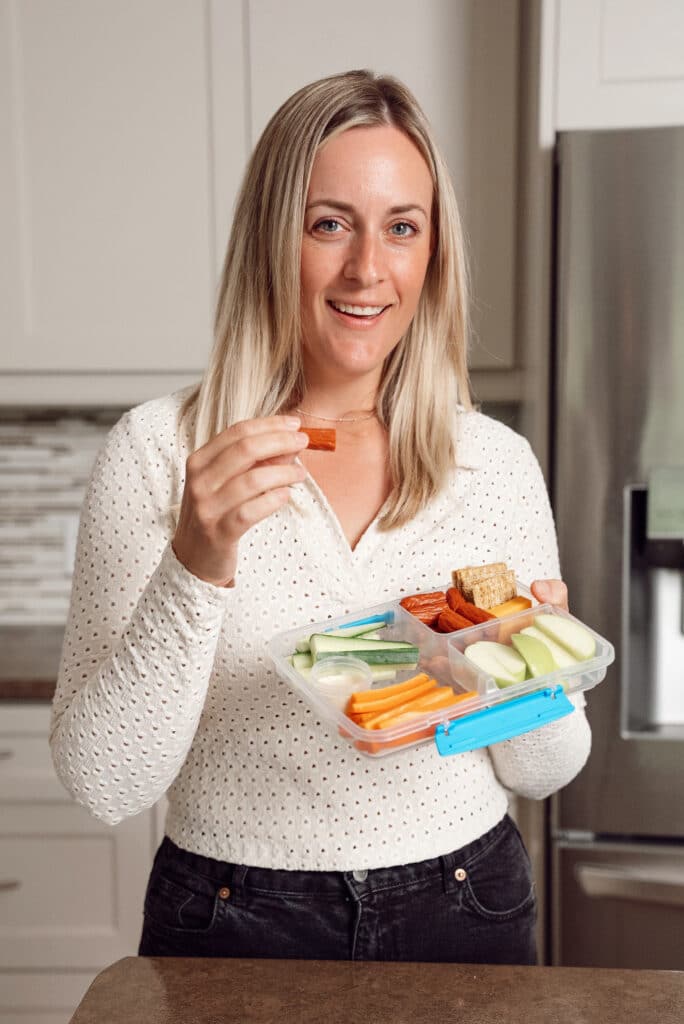
Joanna Wilcox
Joanna Wilcox is a Canadian content creator known for candid, relatable conversations about health, wellness, and real life. Through her online platforms, she has built a community where people can talk openly about their health journeys without shame or judgment. She is passionate about shifting the conversation away from appearance and weight alone, and toward a broader understanding of metabolic health, well-being, and long-term quality of life.
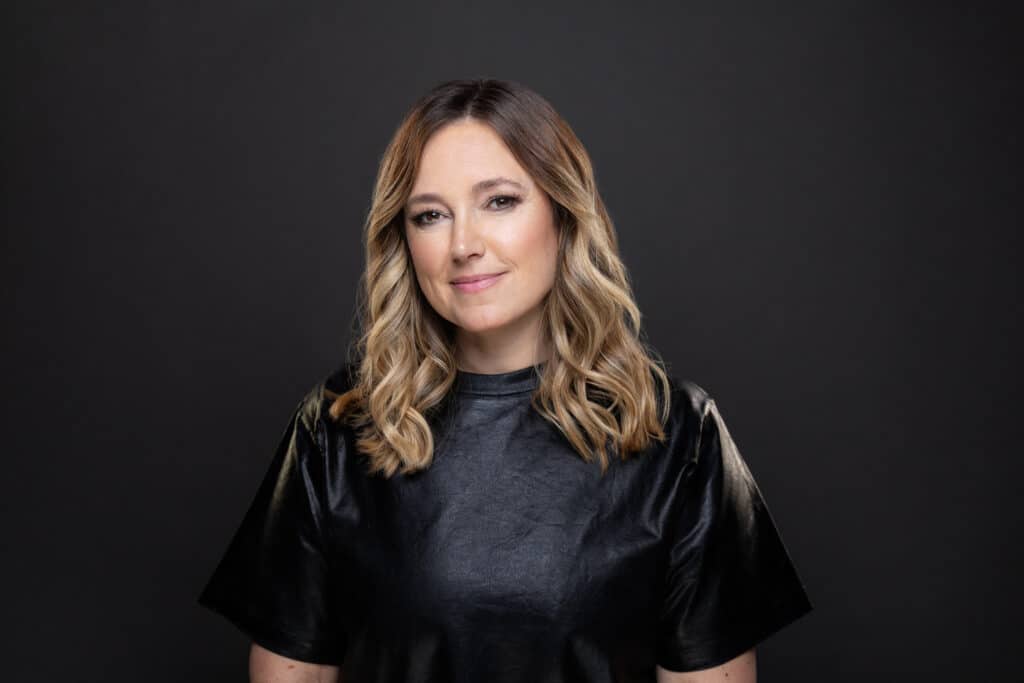
Amber Mac
Amber Mac is a Canadian broadcaster, bestselling author and award-winning podcaster who has spent more than two decades helping people make sense of the moments that shape their lives. She hosts The AmberMac Show on SiriusXM and is a regular business and tech expert on CTV, BNN and CNN. She's been named one of DMZ's Women of the Year.