



Disclaimer: This treatment guide/The information in this blog/article applies to WL and OSA patients.”
Starting medication is an exciting new step in your weight management journey, but it can also feel overwhelming. If you’re considering or have recently been prescribed semaglutide (also known as Ozempic, Wegovy, Rybelsus or generic semaglutide), you might have questions about the dosing process. Let’s walk through what weight management treatment with Felix looks like and what you need to know about semaglutide dosing.
How your semaglutide prescription will work at Felix
The Felix weight management program has been carefully designed with guidance from weight management specialists to be efficient and easy to follow. The treatments we offer are medically backed and prescribed by healthcare practitioners who are weight management informed and there to support you along the way. If you’re approved for treatment, your first prescription will last 12-13 weeks (depending on medication brand), or approximately 3 months.
Some things to note for your first 3 months of treatment:
- Your initial treatment package will include enough medication for your first 4-6 weeks
- You can expect to receive additional medication over the remaining 6-8 weeks until your first renewal
- We’ll automatically ship your medication each month for the duration of your prescription to ensure your medication remains safe, viable and ready for use
- You’ll be prompted to complete a renewal visit during weeks 10-11 in order to continue with treatment (don’t worry, we’ll send you reminders!)
- Before your first renewal visit, you’ll need to complete some basic lab work (don’t worry, we’ll send you reminders for this too!)
*Dispensing and shipping information may differ from the above if you are not using a Felix pharmacy
Titration: What is it and why is it used?
When starting semaglutide treatment, you’ll typically begin with the lowest dose and gradually increase over the next 3 months until your first renewal. This process is called titration or ‘dosing up’.
In scientific terms, titration is a method of determining the smallest concentration of a dissolved substance (drug/medication) required to bring about a desired effect. In simpler terms, it means slowly increasing your medication dose by small amounts over days, weeks, or months in order to find a safe ongoing dose that’s effective for you and your body.
Why is titration so important for semaglutide?
Titration is a vital part of the treatment process when starting semaglutide as it ensures you’re using the medication in a way that is medically safe. Semaglutide was designed to be increased at a specific rate (starting at the lowest dose) to allow your body time to adjust and to minimize any side effects from the medication. This means it’s crucial you don’t increase your dose more quickly than the standard medically-approved dosing schedule has advised.
Dose changes: FAQs
- What exactly is the goal of dosing up?
The goal of dose increases (titration) isn’t to reach the maximum dose available but to find the lowest possible dose that still provides effective results. This isn’t a one-size-fits-all journey, so the dose that’s right for you might not be the dose that’s right for someone else.
- How do I know when to increase my dose?
Starting at the lowest dose, you’ll be dosing up every 4 weeks until you find your effective dose. This process is laid out in more detail within your treatment guide, and we’ll also send you regular emails with reminders and tips to help you along the way.
- Should I increase my dose faster if I’m not seeing results?
It can take anywhere from a few weeks to a few months to start seeing the effects of treatment. Even if you do not see results as quickly as you expected, you should not increase your dose faster than your practitioner has directed — it can cause increased side effects and is not medically safe.
Learn more about semaglutide side effects
- How do I know when to stop increasing my dose?
Everyone’s treatment experience is different, including their effective dose. You’ll know you’ve reached an effective dose and can stop increasing when side effects have subsided, your hunger levels have appropriately decreased, and you’re experiencing gradual weight loss of no more than 1-2 pounds a week.
You should never increase your dose if you’re experiencing any side effects — reach out to your healthcare practitioner instead.
Dosing and titration schedules vary from person to person. In general, you should not increase your dose if:
- You are experiencing side effects from your current dose
- You are losing 1-2lbs per week or more
- You feel the medication isn’t working fast enough
Increasing your dose slowly is important for your safety and helps to reduce side effects. Let your practitioner know right away if you decide not to increase your dose, since your prescription will need to be adjusted.
- What happens if I miss a dose during this process?
If you miss a dose, do not take an extra one or increase the dose to make up for it.
For Ozempic, Wegovy or generic semaglutide, if it’s been 5 days or less since your missed dose, take it as soon as you remember and continue with your next dose on your regularly scheduled day. If it’s been more than 5 days, skip that dose and take your next one as usual.
For Rybelsus, skip the missed dose and take your next tablet the following day as usual.
You can find more info on missed doses in the digital treatment guide you’ll receive once you’re approved for treatment
Semaglutide dosing: A week-by-week breakdown
Though Ozempic, Wegovy and generic semaglutide contain the same active ingredient, the number of doses per pen are slightly different due to the way each pen is manufactured.
Keep in mind these are standard dosing schedules and yours may change depending on how your body reacts to the medication
Your first 3 months on Ozempic or generic semaglutide
Weeks 1-6
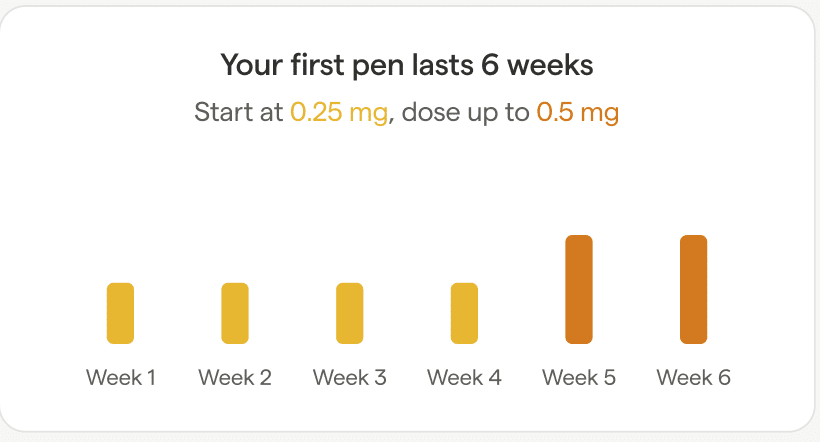
Your first pen will last you 6 weeks. You’ll begin at a dose of 0.25mg and increase to 0.5mg in week 5. Even though your dose is increasing, you’ll keep using your current pen until the end of week 6. Your second pen will arrive before week 7.
Weeks 7-9
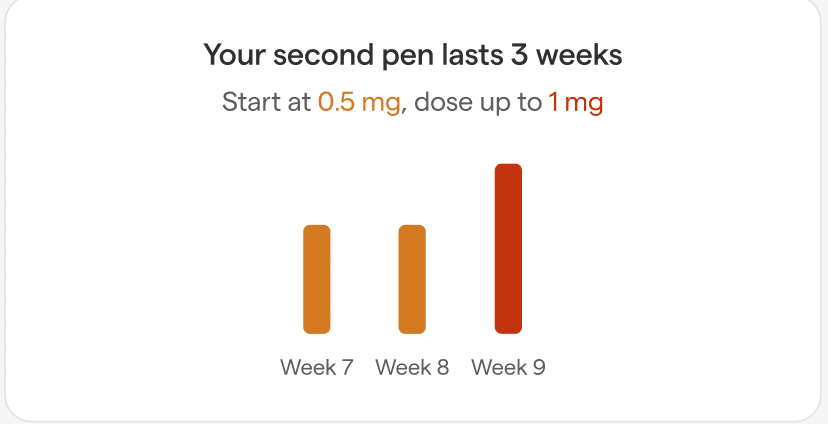
Your second pen will last you 3 weeks. You’ll continue at a dose of 0.5mg for weeks 7 and 8, then increase (if necessary) to 1mg in week 9. You will be administering two 0.5mg injections in immediate succession. Your third pen will arrive before week 10.
Weeks 10-13
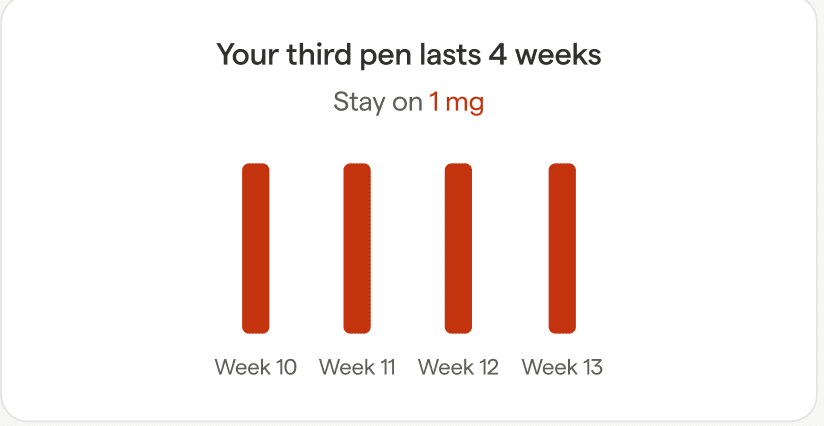
Your third pen will last you 4 weeks. You’ll maintain a dose of 1mg for all 4 weeks and will need to complete a renewal to continue with treatment beyond week 13. You’ll be prompted to complete a renewal during week 11 to allow enough time to receive your next pen.
Your first 3 months on Wegovy
Weeks 1-4
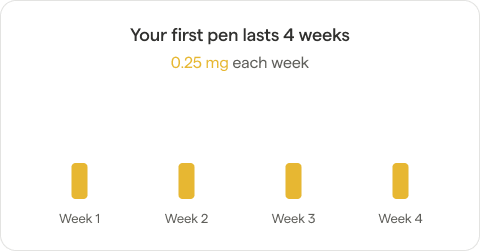
Your first Wegovy pen will last you 4 weeks. You’ll begin at a dose of 0.25mg and will increase your dose when you start your second pen in week 5.
Weeks 5-8
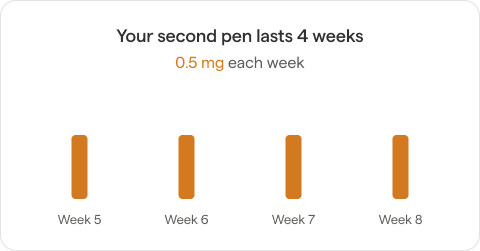
Your second Wegovy pen will arrive before week 5 and will last you another 4 weeks. You’ll increase your dose to 0.5mg at the start of week 5 and continue this dose until the end of week 8.
Weeks 9-12
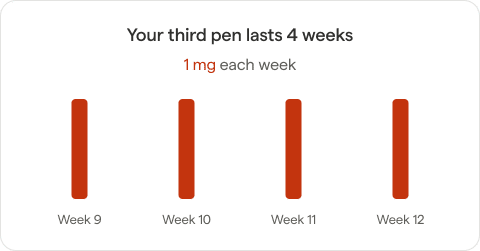
Your third Wegovy pen will arrive before week 9 and last you the remaining 4 weeks until your first renewal. You’ll increase your dose to 1mg (if necessary) at the start of week 9 and continue this dose until the end of week 12. You’ll need to complete a renewal to continue with treatment and will be prompted to do so during week 10 to allow enough time to receive your next pen.
Your first 3 months on Rybelsus
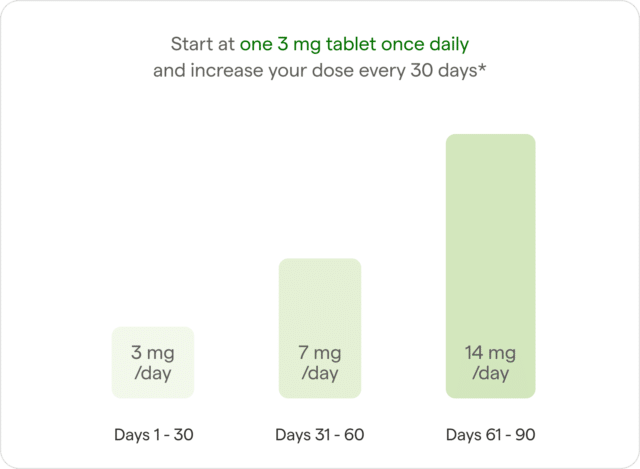
Days 1 – 30
You’ll begin with one 3mg tablet once daily for 30 days.
Days 31 – 60
You’ll increase your dose to one 7mg tablet once daily and stay at this dose for the next 30 days.
Days 61 – 90
You’ll increase your dose to one 14mg tablet once daily and stay at this dose for the next 30 days.
Monitoring and managing side effects
It’s not uncommon to experience some short-term side effects during the first few weeks of treatment, but the length of time that they last and the severity vary from person to person.
Common side effects include:
- Nausea
- Vomiting
- Diarrhea
- Constipation
- Acid reflux
- Headache
- Fatigue
The most common side effects include mild nausea, vomiting, heartburn, diarrhea, or constipation. These most frequently happen when you start a treatment or increase your dose, and usually improve within a few weeks. Over-the-counter medicines can often help reduce the severity of side effects. Please reach out to your Felix practitioner at any time in the chat if you have any questions or concerns about your treatment or side effects. If symptoms persist or become severe, seek in-person care with your primary healthcare practitioner, walk-in clinic or emergency department.
Learn more about semaglutide side effects
Side effects: When to reach out for support
It’s crucial to monitor your body’s response to dose changes and reach out to your practitioner right away if you’re feeling any side effects that are disrupting your regular routine. Remember that if you’re experiencing any side effects at all, you should avoid increasing your dose (even if you’re not seeing adequate results) and check in with your healthcare practitioner instead. They’re available through chat to talk through any questions or concerns you might have.
If you’re experiencing severe or persistent side effects or require immediate support, please seek in-person care or visit your closest emergency department.
This information does not replace medical advice. Any questions you have about your treatment are best discussed directly with your healthcare practitioner.